Rust, How JTeles Turned 126,000 Cloth Into a 20 Million Farming Run
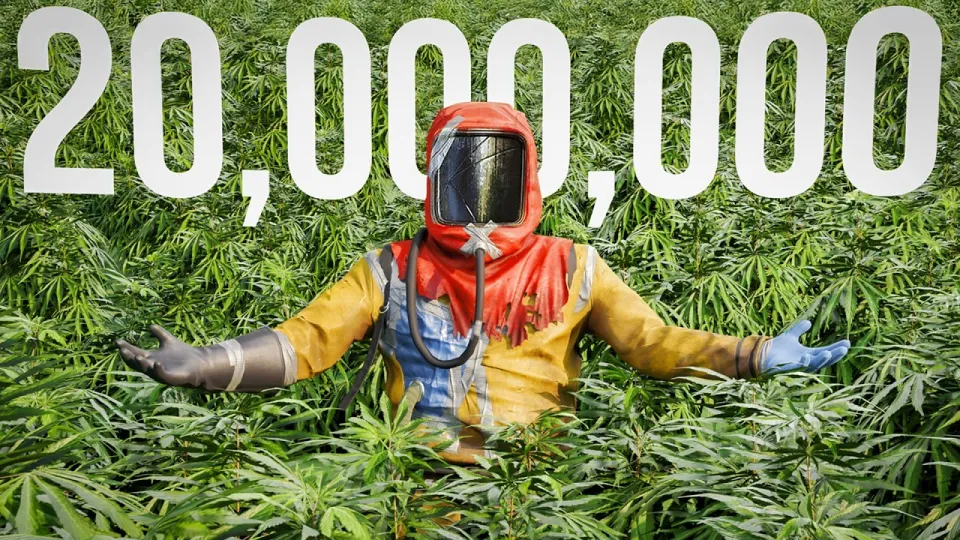
Video: I Became Rust's #1 Farmer...
Need articles like this for your video? They help promote it on YouTube and Google — order them in the Telegram bot @sat_sit_bot. It writes articles around your video, embeds the video and publishes them on popular niche websites (no ads). Free trial — 50 articles.
Rust farming is usually a means to an end — scrap for blueprints, sulfur for raids, wood for upkeep. JTeles flipped that logic and made cloth itself the objective: starting a wipe with 126,000 cloth and pushing toward 20,000,000 in seven days to claim the title of Rust's #1 farmer. The run is documented in the video "I Became Rust's #1 Farmer..." on the JTeles channel, and the sponsor link for the free-to-play War Thunder bonus is here: claim the War Thunder bonus.
What the 20 million cloth challenge actually required
The math is the whole story. Cloth comes from hemp, and hemp comes from seeds, planters, light and time — so a target of 20,000,000 cloth in a single wipe is not a farming problem but an infrastructure problem. JTeles began with 126,000 cloth already banked, which sounds like a lot until you realise it is roughly 0.6% of the final goal.
To close the gap, the plan relied on three things:
- Scale. A single planter farm cannot produce eight figures of cloth in seven days, so the build had to become the biggest cloth farm attempted on the server.
- Labour. JTeles invited viewers onto the server to plant, harvest, run genetics and keep the base supplied around the clock.
- Defence. A compound that size is a visible target, and every hour spent farming is an hour not spent watching doors.
Genetics matter more than raw planter count. Cloth yield per plant scales with the gene values on the seeds, so a farm with strong G and Y genes produces several times what a default hemp seed gives. That is why large cloth operations obsess over cloning and crossbreeding before they ever mass-plant: a mediocre seed planted 1,000 times is wasted space compared with a good clone planted 300 times.
Building the biggest cloth farm in Rust
The compound grew into a full industrial site rather than a farm. Viewer-clan members handled planting and harvesting shifts, kept generators and lights running, moved cloth into storage and repaired the base after every fight. That division of labour is what makes a 20 million target survivable — the owner cannot be online for all seven days of a wipe.
The build also became a performance problem. Once the farm was fully developed, looking at the compound in the wrong direction was enough to drag the server's frame rate down, a detail viewers noticed immediately. In Rust terms that is a backhanded compliment: the base had reached a size the engine genuinely struggles to render.
When a clan decides your farm has to die
Success attracted opposition. A large Russian clan learned what JTeles was attempting and made stopping the farm its project, which turned a farming video into a PvP and raid documentary. The conflict ran through every layer of the game: open-field fights over resource runs, raids on the compound, base defence while under attack, and alliances brokered with other groups on the server to keep the farm alive.
This is the part of Rust that punishes solo ambition. A farm of that scale cannot be hidden — the lights, the traffic and the sheer footprint give it away — so the only real defence is people. Overnight holds, where clan members defended the base while JTeles slept, were the difference between a finished project and a wiped one. It is also where the most respect in the community went: holding a base at 4 a.m. for someone else's goal is not glamorous work.
The grind behind the numbers
Farming 20 million cloth is not a highlight reel. It is hours of planting, watering, harvesting and hauling, repeated until the storage boxes stop being satisfying and start being a spreadsheet. JTeles leaned into that monotony on camera, including the moment he admitted stepping outside for the first time since wipe and being startled by how bright daylight was.
For anyone thinking of copying the idea on a smaller scale, the practical lessons are the same at any size:
- Get genetics done first; clone a strong seed before mass-planting anything.
- Build planter banks in a layout you can harvest without backtracking.
- Keep power and light redundant — one blackout stalls an entire cycle.
- Recruit before you need help, not after the first raid.
Questions viewers keep asking about the run
A recurring theme in the comments is disbelief at the target itself — 20 million cloth reads as an impossible number until you see the planter count behind it. Others focus on the logistics: how the farm was kept running while the owner was offline, how much of the work was done by viewers, and whether the compound's size was actually a liability given the lag it caused. There is also the inevitable comparison to other Rust content creators known for marathon farming sessions, and the running joke that a full uncut version of this wipe would run for days.
Links from the video
- War Thunder free-to-play bonus (PC and consoles): https://wtplay.link/jteles
- War Thunder mobile: https://wtm.game/jteles
- JTeles Discord: https://discord.gg/jteles
- Twitter/X: https://twitter.com/xJTeles
- TikTok: https://www.tiktok.com/@xjteles
The verdict on Rust's #1 farmer
The 20 million cloth run works because it treats farming as a team sport rather than a solo grind. JTeles supplied the goal and the ridiculous scale; the viewer clan supplied the shifts, the defence and the overnight holds that made the target reachable. The result is a wipe-long story about infrastructure, diplomacy and PvP, where the farm is the plot and the raids are the interruptions. If you want to see how far a Rust wipe can be pushed when an entire server gets involved, this breakdown from the JTeles channel is the place to start — and if you want the free-to-play bonus from the sponsor, grab the War Thunder offer here.
Key takeaways
- JTeles started the wipe with 126,000 cloth and set a goal of 20,000,000 cloth in seven days.
- Viewers were invited onto the server to help build and defend the farm.
- A large Russian clan tried to stop the project with PvP, raids and base defense fights.
- The finished compound was big enough to lag the server when rendered on screen.
- The farm was held around the clock, including overnight defenses while JTeles was offline.
Source: I Became Rust's #1 Farmer... · Markdown version
Questions & answers
How much cloth did JTeles start with in the challenge?
He started the wipe with 126,000 cloth already collected and set a goal of 20,000,000 cloth before the wipe ended. That starting stock is less than one percent of the final target, so almost all of the cloth had to come from the farm built during the run.
How long did the 20 million cloth goal take?
The plan was to reach the target within a single seven-day wipe. Hitting it required the farm to run almost continuously, with viewer-clan members covering planting, harvesting and base defence while JTeles was offline.
Why did a clan try to stop the farm?
A large Russian clan found out about the project and made destroying it a priority, which led to raids, open-field PvP and base defence fights. A compound that size cannot be hidden, so the farm's survival depended on the group defending it rather than on secrecy.
Can a solo player farm 20 million cloth in Rust?
Practically, no. The target depends on a large planter bank with strong genetics, constant power and light, and enough people to harvest and defend around the clock. Solo players can use the same genetics-first approach, but at a much smaller scale and over a longer period.